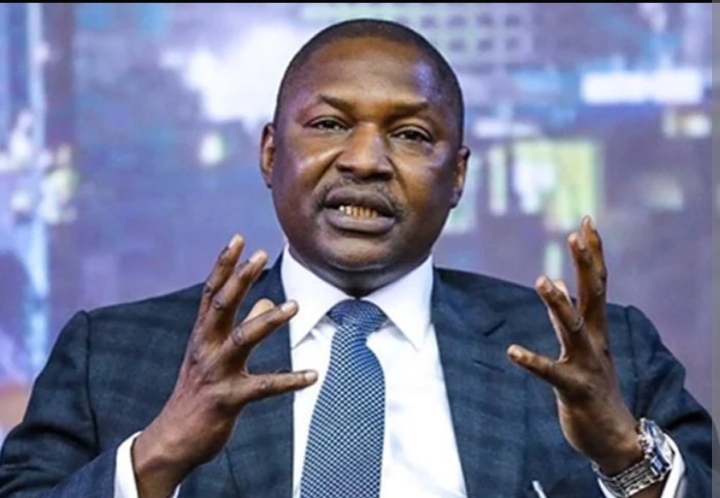

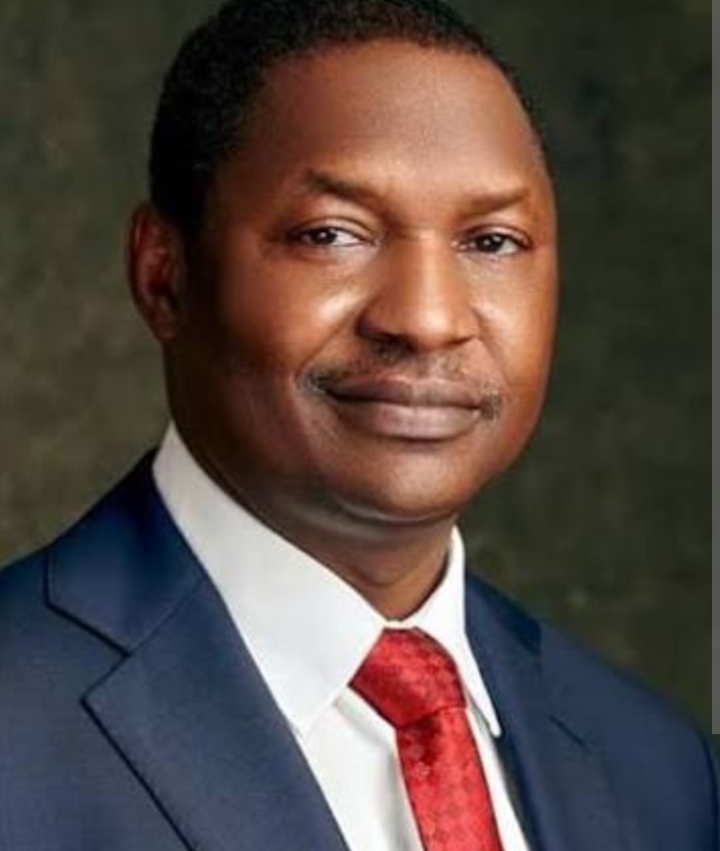
Abuja — Former Attorney-General of the Federation and Minister of Justice, Abubakar Malami, SAN, is at the centre of one of Nigeria’s most high-profile corruption cases, following allegations by the Economic and Financial Crimes Commission (EFCC) that he was involved in large-scale money laundering and unlawful acquisition of assets while in and after public office.
Malami, who served as Nigeria’s chief law officer between 2015 and 2023, is accused by anti-graft investigators of using front companies, associates, and family members to conceal the origin of funds allegedly running into billions of naira, proceeds the EFCC claims were linked to unlawful activities.
The Allegations
According to court documents filed by the EFCC, Malami, alongside his son and an associate, is alleged to have engaged in complex financial transactions designed to disguise the source and ownership of large sums of money. The prosecution claims the funds were moved through corporate entities, bank accounts, and real estate investments, in violation of Nigeria’s money-laundering laws.
Investigators further allege that the former minister used the proceeds to acquire high-value properties in Abuja and other parts of the country, including luxury residences and commercial assets. In one of its filings, the EFCC said it had traced dozens of properties allegedly linked to the former attorney-general, with a combined value estimated at over ₦200 billion.
The charges against Malami include money laundering, concealment of proceeds of crime, and unlawful acquisition of assets, offences which carry heavy penalties under Nigerian law if proven.
From Anti-Corruption Czar to Accused
The allegations have attracted significant public attention given Malami’s former role as head of the Ministry of Justice and a key figure in the Buhari administration’s anti-corruption agenda. As attorney-general, Malami oversaw major corruption prosecutions, asset recoveries, and high-profile legal battles on behalf of the federal government.
Critics have long accused him of wielding excessive influence over corruption cases, including decisions to discontinue or delay prosecutions involving politically connected individuals. While many of those criticisms were previously dismissed as political attacks, the current EFCC charges have reignited debate over accountability at the highest levels of government.
Malami’s Response
Malami has consistently denied all allegations of corruption and money laundering. In earlier statements, he described accusations against him as false, malicious, and politically motivated, insisting that his wealth was derived from legitimate legal practice and business interests established before he joined government.
His legal team maintains that the prosecution will be unable to prove its case in court and has urged the public to respect the principle of presumption of innocence, as guaranteed by the Nigerian Constitution.
Legal Status
The case is currently before the Federal High Court in Abuja, where Malami and his co-defendants are expected to answer the charges. The court has yet to deliver a verdict, and the trial is expected to involve extensive examination of financial records, property ownership documents, and witness testimony.
Legal experts say the outcome could set an important precedent for post-office accountability in Nigeria, particularly for former senior officials who once controlled powerful state institutions.
Public Interest and Implications
Civil society organisations and anti-corruption advocates have described the case as a litmus test for the government’s commitment to fighting corruption without fear or favour. They argue that a transparent and diligent prosecution would help restore public confidence in the justice system.
- For now, the allegations against Abubakar Malami remain unproven, and the former attorney-general remains innocent in the eyes of the law until a court decides otherwise. But as the trial unfolds, many Nigerians will be watching closely, viewing the case as a defining moment in the country’s long struggle against corruption.